
 Posted by
 (Powered by POZITRON SOUPLETHANE 5)
Introduction: The Hidden Risk Beneath Our Feet
When patients, doctors, or visitors walk through a hospital, they rarely think about the floor. They trust that the facility is safe, clean, and sterile. Yet for facility managers, infection control specialists, and healthcare architects, the choice of flooring can be one of the most critical decisions affecting patient safety.
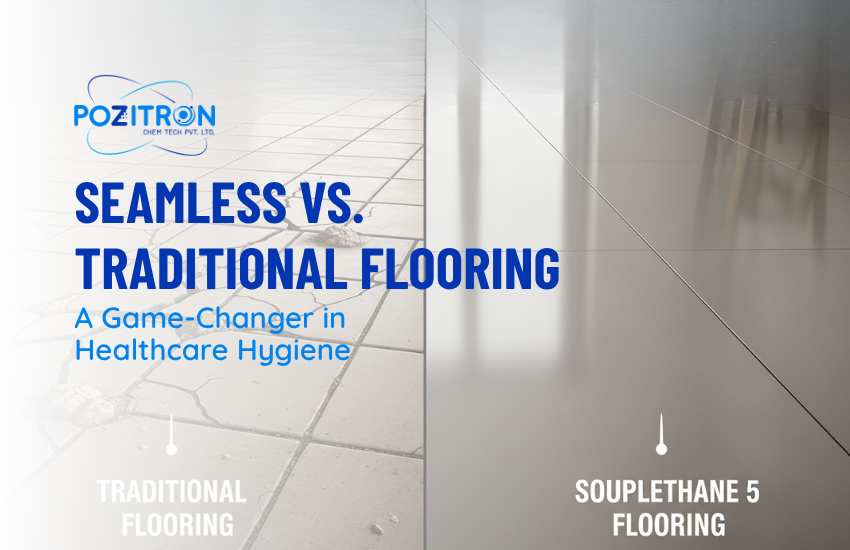
Traditional flooring systems—such as tiles, vinyl sheets, or even standard epoxy—are widely used in healthcare facilities due to their availability and affordability. However, these materials often fail to deliver when it comes to hygiene, durability, and long-term infection control.
Enter Pozitron Souplethane 5, a two-component, solvent-free, polyurea-urethane flooring system that redefines hospital flooring. Unlike traditional options, it provides a seamless, joint-free, bacteria-resistant membrane that ensures floors are no longer a weak link in hygiene management.
This article compares traditional flooring systems vs. Souplethane 5, highlighting why seamless flooring is a game-changer for hospitals, pharma, and hygiene-sensitive industries.
Traditional Hospital Flooring: The Weak Points
1. Tiles & Grout Lines
Ceramic tiles have been the go-to flooring solution for decades. While they are durable and easy to clean at the surface level, the grout lines are the real problem.
- Microbial Harbors: Grout is porous, absorbs moisture, and becomes a breeding ground for bacteria.
- Maintenance Nightmare: Over time, grout lines discolor, crack, and require constant repairs.
- Cleaning Challenges: Even strong disinfectants cannot fully penetrate into tiny crevices.
2. Vinyl Sheet Flooring
Vinyl is cost-effective and relatively quick to install, but it comes with inherent limitations:
- Seam Separation: Over time, seams peel or shrink, creating gaps.
- Vulnerability to Heavy Loads: Hospital beds, trolleys, and equipment cause dents and cuts.
- Limited Chemical Resistance: Strong cleaning agents degrade vinyl surfaces.
3. Epoxy Coatings
Epoxy flooring is often used in labs and industrial facilities, but in hospitals it faces specific weaknesses:
- Chalking & Cracking: Epoxies are rigid and may crack under thermal shock.
- Limited Resistance to Strong Cleaners: Many epoxies degrade with chlorine- and alcohol-based disinfectants.
- Micro-Cracks: Tiny cracks invisible to the eye can still harbor bacteria.
4. Concrete Floors
Left untreated or poorly sealed, concrete is highly porous, making it unsuitable for hygienic environments. Even polished concrete eventually develops cracks.
The Seamless Advantage of Souplethane 5
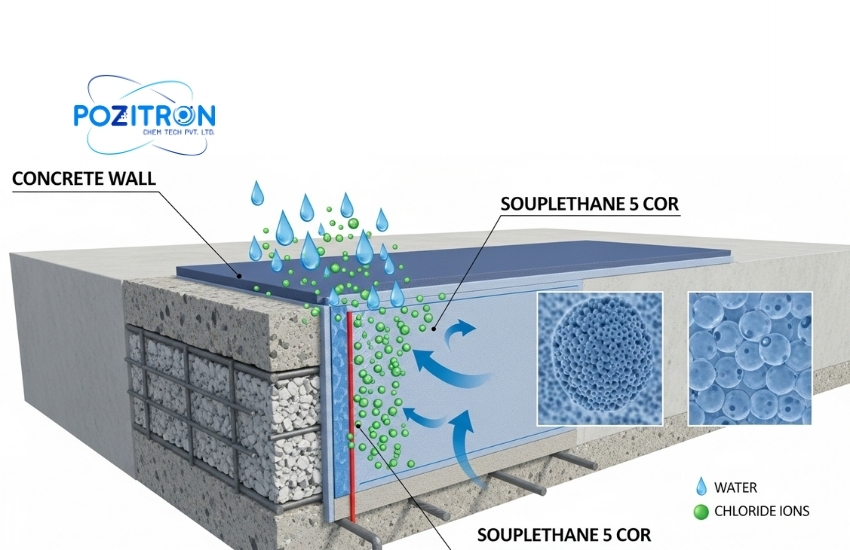
Souplethane 5 addresses every weakness of traditional flooring with its seamless, microporosity-free, jointless design
1. No Joints, No Bacteria Harbors
Being liquid-applied, Souplethane 5 cures into a monolithic surface. There are no joints, grout lines, or seams—leaving bacteria no place to hide.
2. Proven “No Bacteria Development”
Laboratory tests confirm that bacteria cannot develop or survive on Souplethane 5 flooring. Within 24 hours, microbes present on the surface die naturally, unlike in traditional flooring systems where they multiply.
3. Chemical & Disinfectant Resistance
Souplethane 5 withstands aggressive cleaning agents, disinfectants, and sanitizers without degrading. This ensures that hospitals can follow strict cleaning routines without damaging the floor.
4. Thermal Shock Resistance
Operating theaters and hospital kitchens often undergo rapid temperature changes. Souplethane 5 resists -50°C to +160°C without cracking, unlike epoxies and vinyl that fail under such stress.
5. Mechanical Strength
With >110 MPa compressive strength and excellent adhesion to concrete and steel, Souplethane 5 handles hospital foot traffic, wheelchairs, trolleys, and equipment easily.
6. Eco-Safe Composition
- 100% solvent-free
- Odor-free during application (safe for occupied hospitals)
- Bisphenol A-free
Applications in Healthcare Facilities
Intensive Care Units (ICUs)
Patients in ICUs are highly vulnerable. Seamless Souplethane 5 floors ensure no microbial harbors, supporting strict infection control.
Operating Theaters
No pores, no cracks → no bacterial growth. Combined with resistance to chemical sterilization, Souplethane 5 makes operating theaters safer.
Wards & Corridors
High-traffic areas need durability and easy cleaning. Souplethane 5 provides long-term cost savings while maintaining hygiene.
Pharma Clean Rooms
Designed to comply with GMP standards, Souplethane 5 ensures contamination-free environments for drug production.
Real-World Comparison: Tiles vs. Souplethane 5
| Feature | Tiles/Vinyl | Epoxy | Souplethane 5 |
| Joints/Seams | Present | Some | None |
| Bacteria Development | High | Moderate | NonePOZITRON SOUPLETHANE 5 – data s… |
| Chemical Resistance | Limited | Moderate | ExcellentPOZITRON SOUPLETHANE 5 – data s… |
| Thermal Shock Resistance | Poor | Limited | Excellent (-50°C to +160°C)POZITRON SOUPLETHANE 5 – data s… |
| Durability Under Cleaning | Weak | Moderate | Strong |
| Eco-Safe (VOC/BPA Free) | No | No | YesPOZITRON SOUPLETHANE 5 – data s… |
Cost-Benefit Analysis
At first glance, Souplethane 5 may cost more upfront compared to tiles or vinyl. But the total cost of ownership tells a different story:
- Lower Maintenance: No grout repairs, no seam separations.
- Extended Lifespan: 10+ years without recoating.
- Reduced HAIs: Hospitals save money on antibiotics, patient stays, and reputational damage.
- Compliance: Meets ISO and GMP hygiene standards.
When accounting for infection-related costs, Souplethane 5 provides 5–10x ROI over traditional flooring systems.
Case Example: From Tiles to Seamless Hygiene
A private hospital upgraded its pediatric ward flooring from ceramic tiles to Souplethane 5. The results:
- Cleaning times reduced by 30%.
- Fewer bacterial hotspots detected during hygiene audits.
- Positive patient feedback on aesthetics and comfort.
Conclusion: The Future is Seamless
In healthcare, prevention is always better than cure. While traditional flooring systems compromise hygiene with joints and seams, Souplethane 5 offers seamless, bacteria-free protection that redefines infection control.
Hospitals, pharma plants, and food industries adopting Souplethane 5 are not just investing in durability—they’re investing in patient safety, regulatory compliance, and long-term savings.
